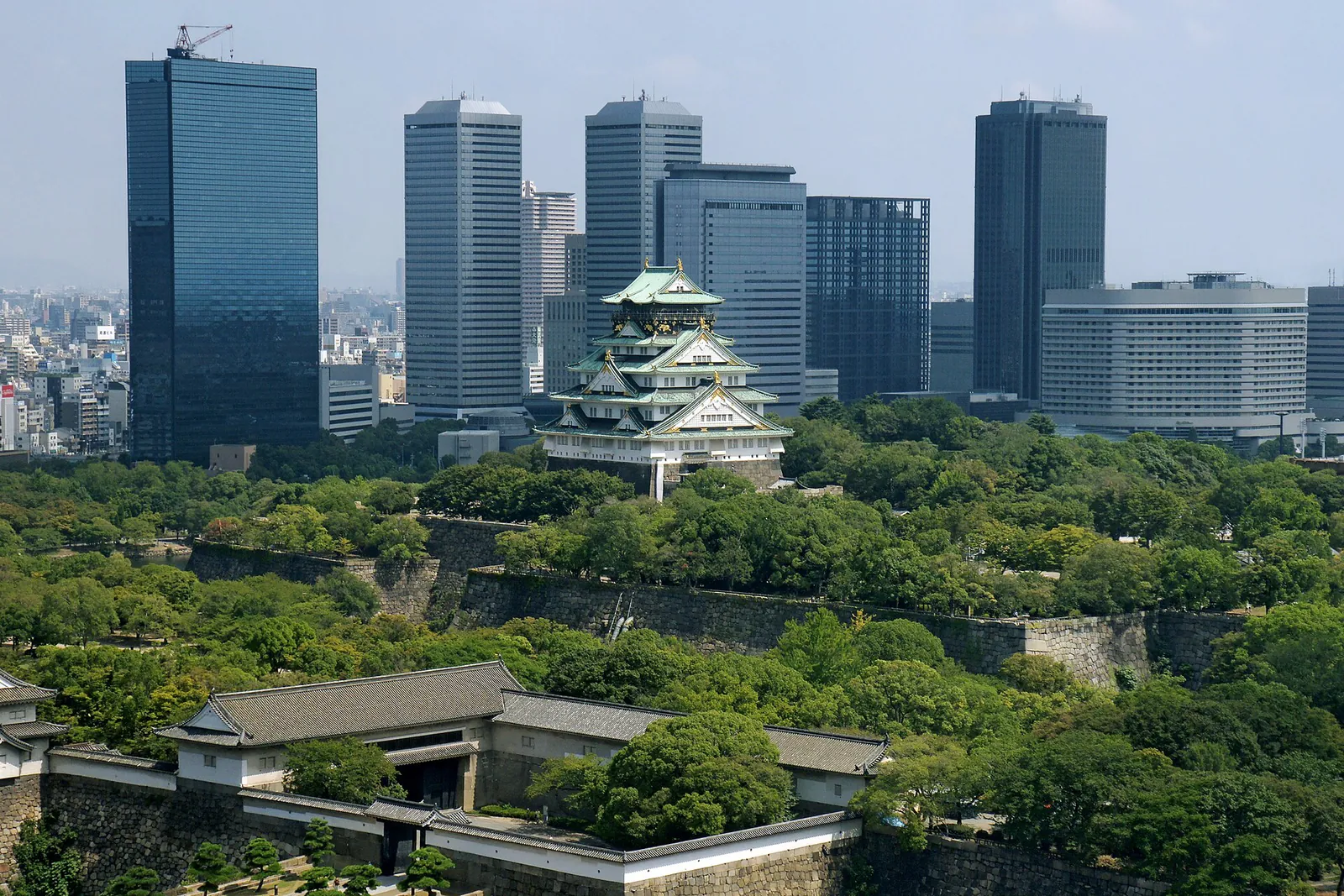
Osaka Castle / 663highland · CC BY 2.5
Osaka · suggested length: 2 days, 1 night
Osaka History for Travelers: Why It Was the Nation's Kitchen
Osaka in three lines
- It sat at the mouth of the Yodo River, linking the Seto Inland Sea with Kyoto.
- In the Edo period, rice and goods from across the country first gathered in Osaka, where their prices were set.
- The money that piled up flowed into theaters and entertainment districts, creating the lively Osaka of today.
Where goods gather, a system grows up to handle them, and so does a culture of people who make money from them.
Planned and checked by Waka Travel (Japan) ·
A hub known as the "nation's kitchen"
Osaka stands at the mouth of the Yodo River, the junction between the Seto Inland Sea and Kyoto. In the Edo period, rice and goods from all over the country came here first to be priced, then were shipped on to Edo. Osaka's street plan and its food culture both grew out of this role as a place where goods and money changed hands.
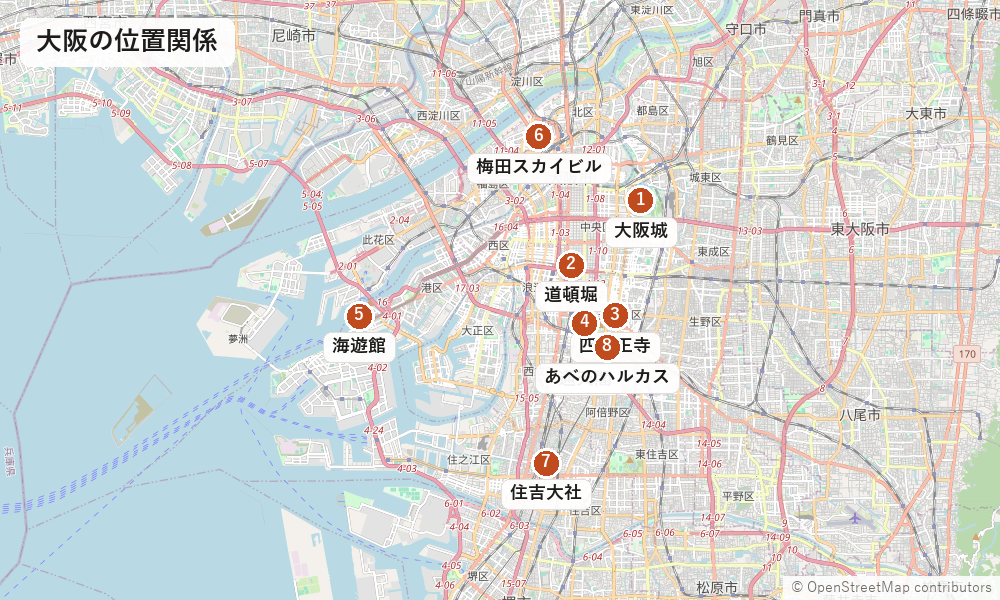
What each place tells you
1Osaka Castle 大阪城Day 1
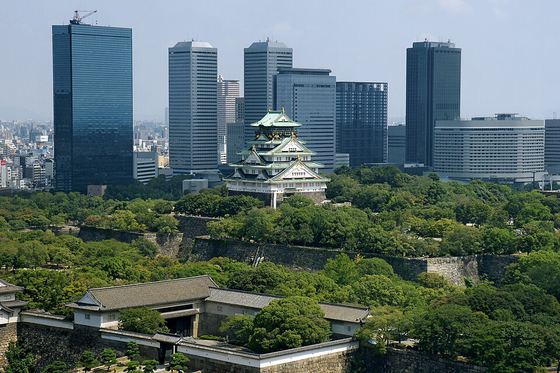
Toyotomi Hideyoshi built it on the site of the Ishiyama Hongan-ji temple. He chose the site because it was high ground from which he could control the waterways. But the stone walls and moats you see today were rebuilt by the Tokugawa shogunate after the Siege of Osaka (the Summer Campaign), and Hideyoshi's castle lies buried beneath them. The keep is a reinforced-concrete building put up in 1931 with donations from the citizens. Three eras are layered on one spot.
2Dotonbori 道頓堀Day 2
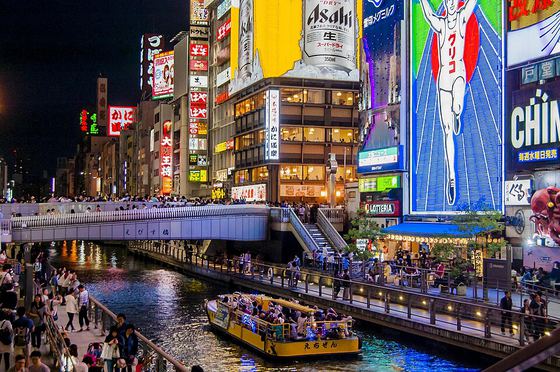
This canal was dug by a townsman, Yasui Doton, at his own expense: merchants, not the government, built this waterway. Theaters gathered along it, and it grew into today's entertainment district. Osaka's cycle of money earned and then spent on entertainment started here.
3Shitenno-ji 四天王寺Day 1
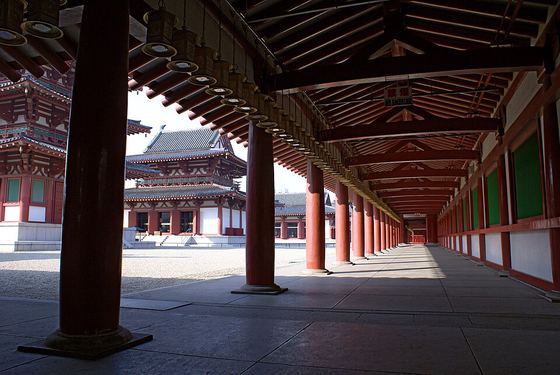
Said to have been founded by Prince Shotoku, it is one of the oldest temples in Japan. Osaka Bay then reached much farther inland, and the temple stood near the sea. Its buildings burned in the war, and in 1963 they were rebuilt in reinforced concrete on the original Asuka-period layout. What has come down to us is the layout, not the original materials.
4Tsutenkaku Tower 通天閣Day 1
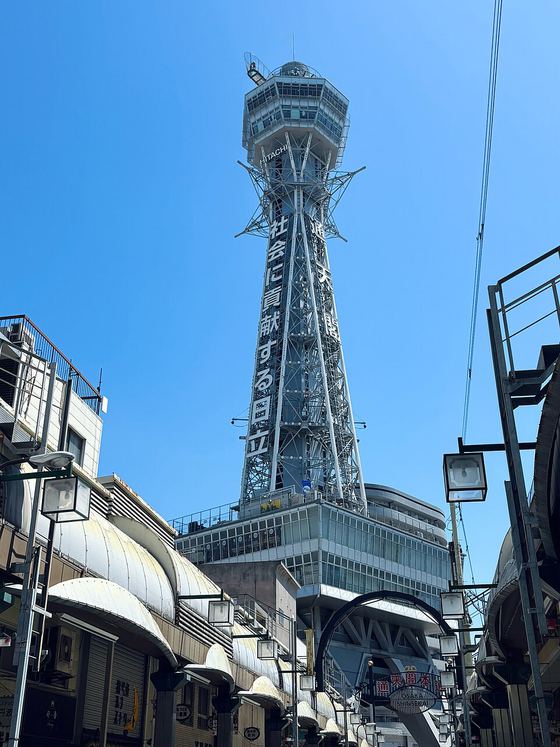
The tower stands on the site of a Meiji-era exposition, and the Shinsekai district around it was planned as an amusement area after the expo. The first tower was taken down during the war; the current one, from 1956, is the second. What survives is the way modern Osaka turned entertainment into an industry.
5Osaka Aquarium Kaiyukan 海遊館Day 2
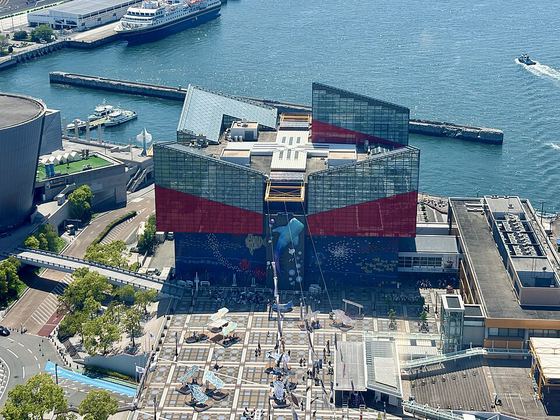
It stands in a redeveloped district of old docks and warehouses, marking the point where a port for loading and unloading goods became a place that draws people. Next door, Tempozan is a hill built in the Edo period from earth dredged out of the Aji River, and it also served as a landmark for ships entering port.
6Umeda Sky Building 梅田スカイビルIf you have time
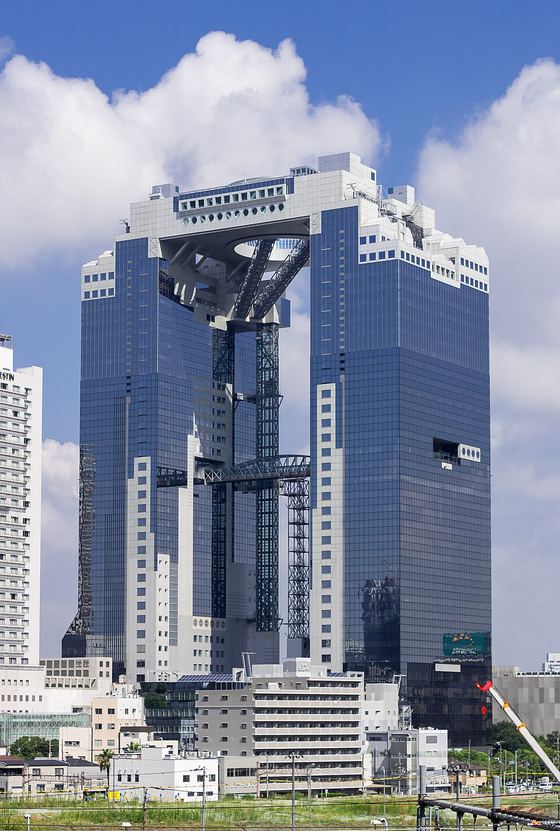
From the observatory that joins its two towers, you can see how wide Osaka's plain is, with the city running on and on across the low ground laid down by the Yodo River.
7Sumiyoshi Taisha 住吉大社Day 2
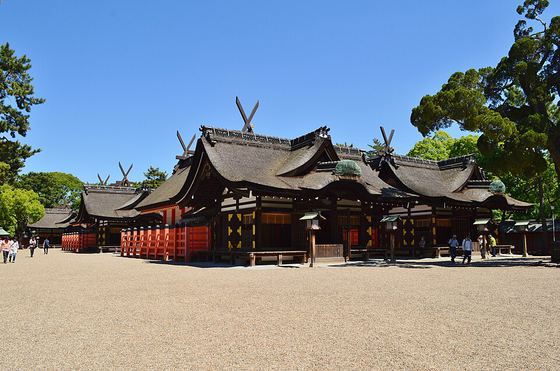
An ancient shrine to the gods of seafaring. It sits inland now, but the sea once lay right in front of it. The gap between the shrine and today's coast shows how far land reclamation has pushed Osaka Bay back.
8Nakanoshima Park 中之島公園Day 1
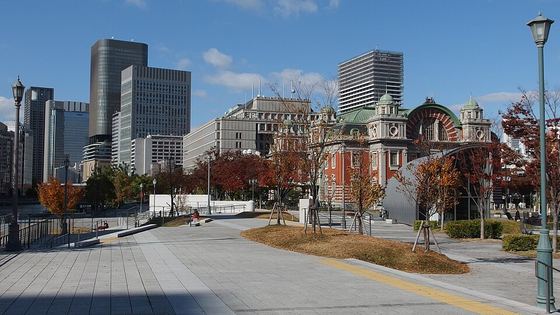
Nakanoshima is a long, narrow sandbar between the Dojima River and the Tosabori River. In the Edo period, the domains' warehouse-residences (kurayashiki) lined the island, and tax rice from each region was shipped in by boat and sold. On the north bank at Dojima stood a rice exchange, officially recognized by the shogunate in 1730, and the prices set there became the benchmark for the whole country. When the warehouse-residences fell out of use in the Meiji era, a park and a public hall were built on their sites.
9Osaka Tenmangu Shrine 大阪天満宮If you have time
A shrine to Sugawara no Michizane, said to have been founded in 949. During the summer Tenjin Matsuri, a procession of boats carries the deity along the Okawa River: a city that once moved its goods by boat still holds its festival on the water.
10Abeno Harukas あべのハルカスIf you have time
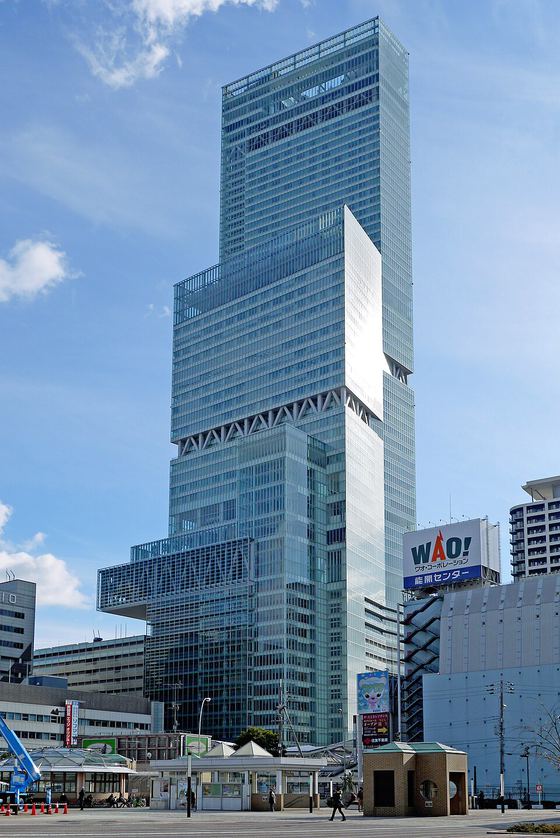
At 300 m, it was the tallest building in Japan until Azabudai Hills Mori JP Tower was completed in Tokyo in 2023. It stands at the southern end of the Uemachi Plateau, and looking down you can see the ground fall away sharply to the west. Osaka Castle sits at the northern end of the same plateau.
After you've seen them all
By the end, you see that Osaka's energy comes from a system, not just from the temperament of its people. The cycle of goods coming in, merchants profiting and money flowing into entertainment still shows in its place names and buildings.
Visiting these 7 places in the shortest order
2 days, 1 night, with 4 h 57 min of travel in total. Stay at Namba Station area.
- Day 1 Nakanoshima Park → Osaka Castle → Shitenno-ji → Tsutenkaku Tower
- Day 2 Dotonbori → Sumiyoshi Taisha → Osaka Aquarium Kaiyukan
If you have time: Umeda Sky Building, Osaka Tenmangu Shrine, Abeno Harukas (covered in the story, but left out of the route to keep each day manageable).
For arrival times at every stop, see the Osaka itinerary.
More stories
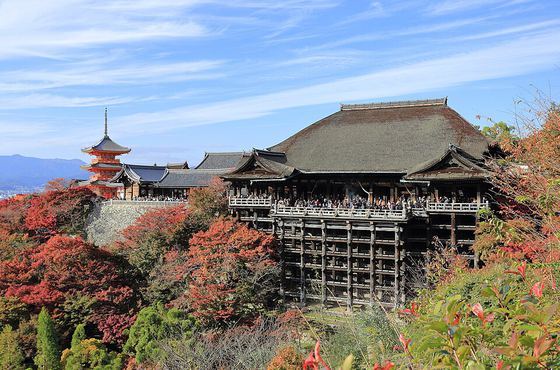 KyotoKyotoA thousand years of a city rebuilt by whoever held powerEach time power changed hands, whoever took over left their own answer in the same basin. In Kyoto, those answers still stand side by side.15 places · 3 days, 2 nights
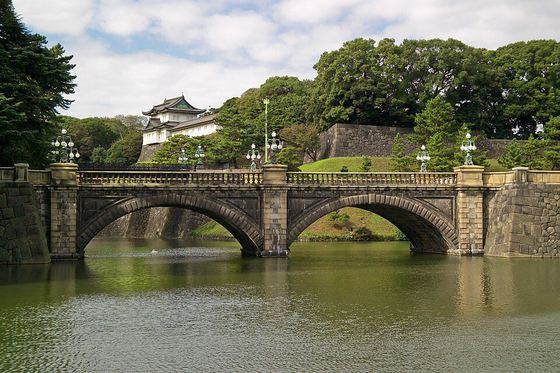 TokyoTokyoA city made by reshaping the landThis was wetland. People dug it out, filled it in and turned it into a city, and the marks of that work are still the shape of Tokyo today.14 places · 3 days, 2 nights
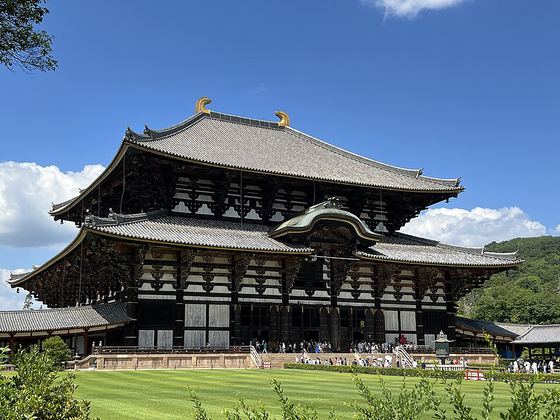 NaraNaraWhere Japan tried to become a nation-stateHere you can still see the real thing: what remains from the years when Japan was being put together as a country.9 places · 2 days, 1 night
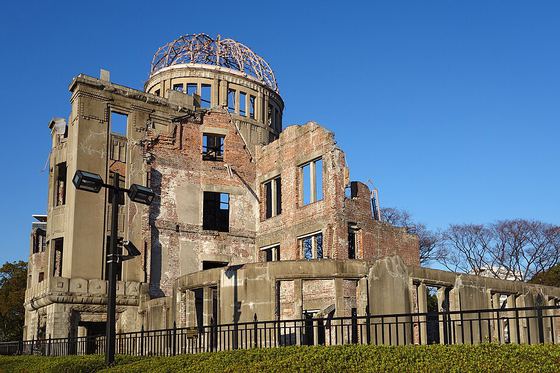 HiroshimaHiroshima & MiyajimaA place where people twice chose to preserveA city that was destroyed, and a shrine built out over the sea so that the island would not be harmed. Both lie on the same bay.10 places · 2 days, 1 night
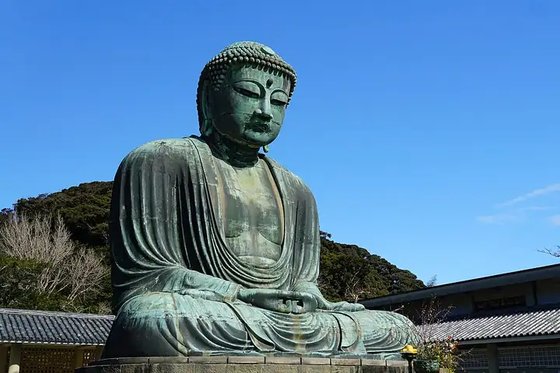 KanagawaKamakuraThe samurai's first capital, protected by mountains and seaOn a narrow piece of land with mountains on three sides and the sea on the fourth, the samurai set up their own government for the first time.7 places · 2 days, 1 night
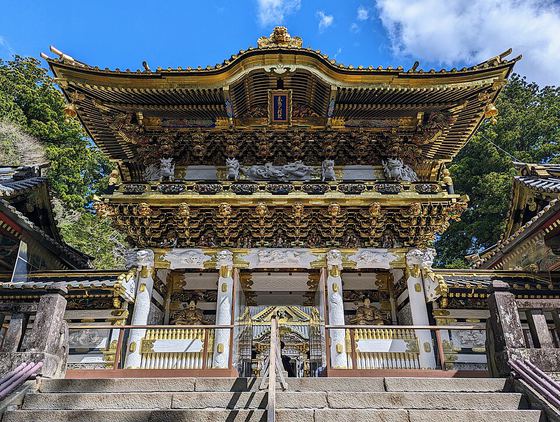 NikkoNikkoWhere mountain worship meets a god made for politicsOn a mountain that was already sacred, a shrine was added that turned a man into a god.9 places · 2 days, 1 night
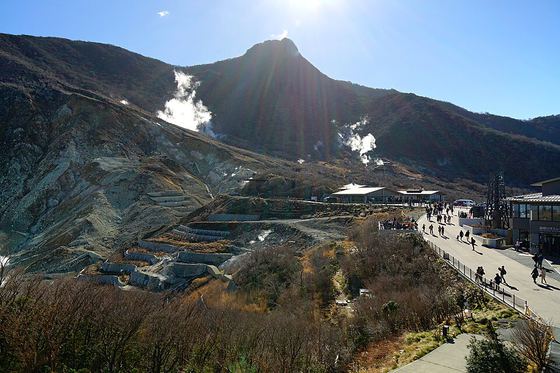 HakoneHakoneWhere the landscape shaped the rulesThe rugged land a volcano left behind became, just as it was, a line of defense for Edo.9 places · 2 days, 1 night
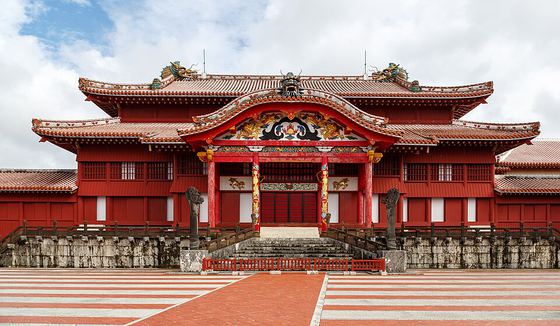 OkinawaOkinawaA kingdom open to the sea, and what came afterThis was an independent kingdom, with a culture that was neither Japanese nor Chinese.10 places · 3 days, 2 nights
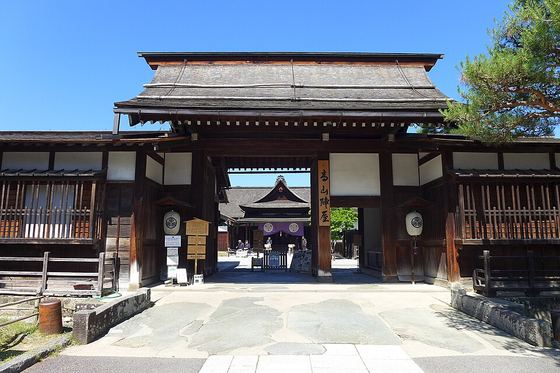 GifuTakayama & Shirakawa-goTwo ways of living in a land shut in by mountainsDeep in the mountains, Takayama grew up around the shogunate's government office, while Shirakawa-go made its living from work done in the attic.7 places · 2 days, 1 night
 KanazawaKanazawaAn Edo-period town plan, still visible because it was never destroyedA castle town the war never reached still keeps its original plan.11 places · 2 days, 1 night
 SapporoSapporoA city drawn up as national policyAbout 150 years ago, there was no city here. Sapporo was built from a blueprint.16 places · 3 days, 2 nights