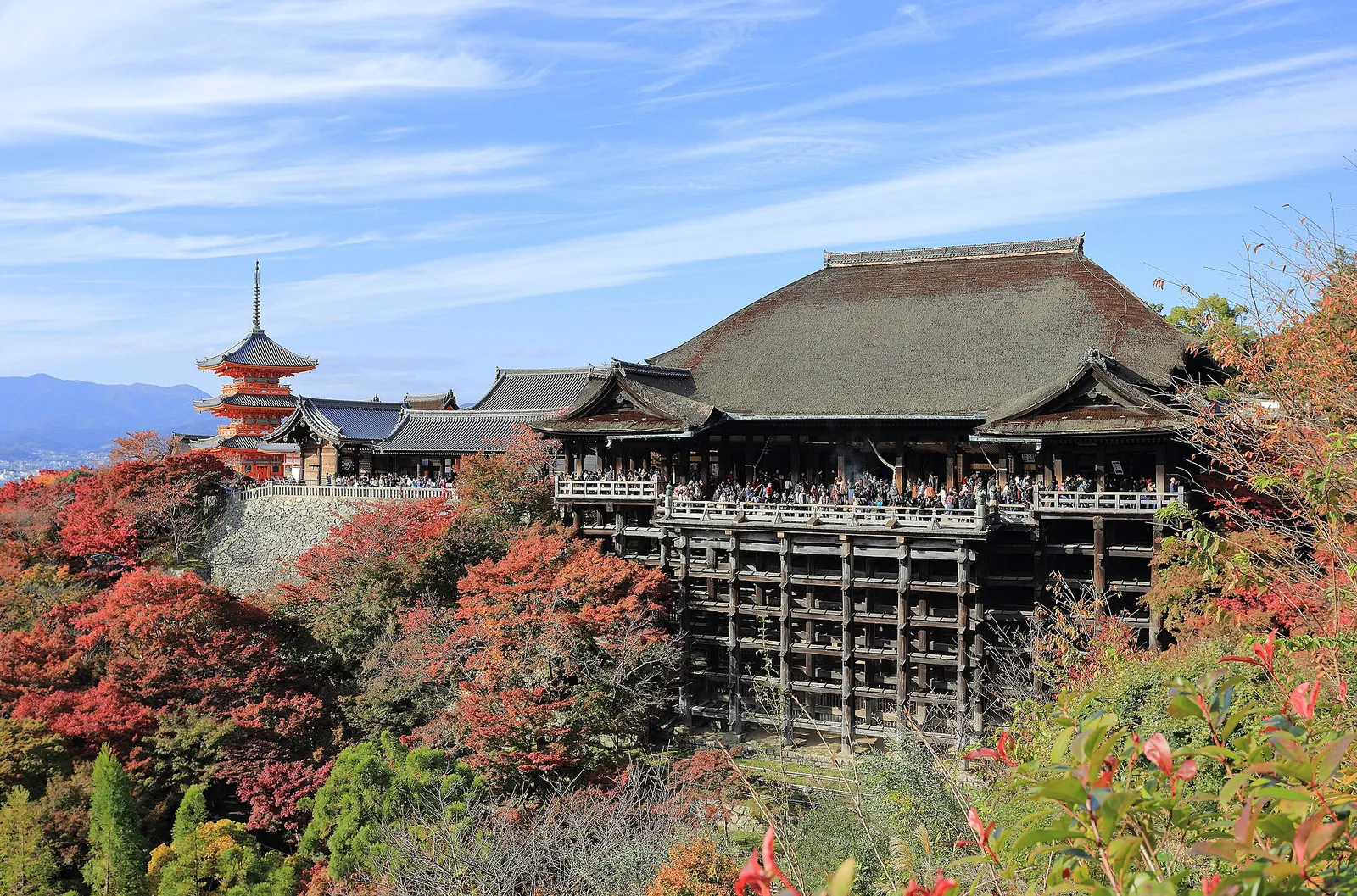
Kiyomizu-dera / Martin Falbisoner · CC BY-SA 4.0
Kyoto · suggested length: 3 days, 2 nights
Kyoto History for Travelers: What Each Famous Sight Means
Each time power changed hands, whoever took over left their own answer in the same basin. In Kyoto, those answers still stand side by side.
Planned and checked by Waka Travel (Japan) ·
A thousand years of a city rebuilt by whoever held power
Kyoto's buildings come from very different eras, yet they all share one basin. Court aristocrats, warriors, shoguns, merchants: each time power passed to a new group, that group gave shape to its own idea of what was worth building. Walking around Kyoto is a way of seeing those values laid out next to each other, one era after another.
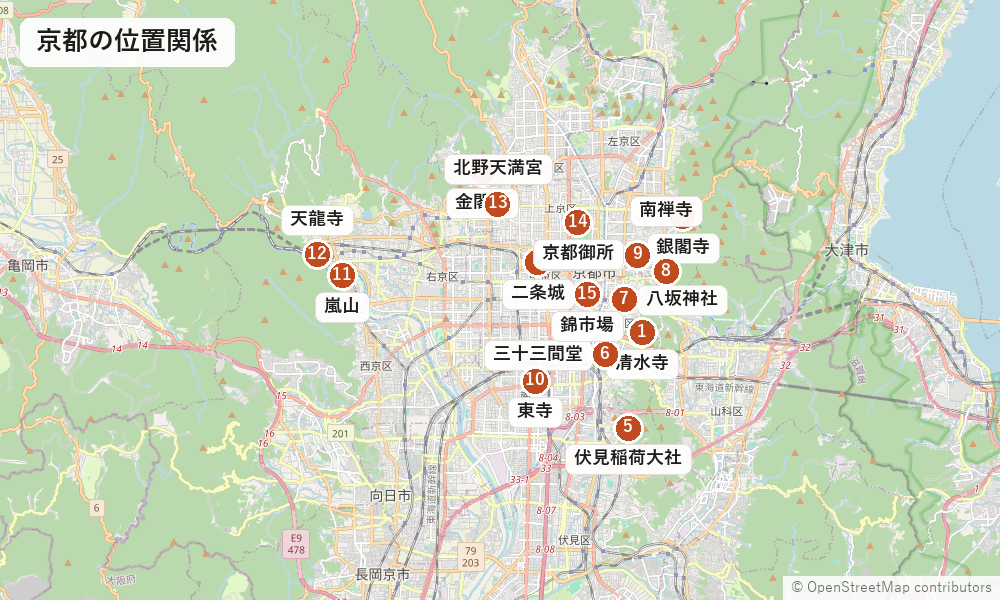
What each place tells you
1Kiyomizu-dera 清水寺Day 1
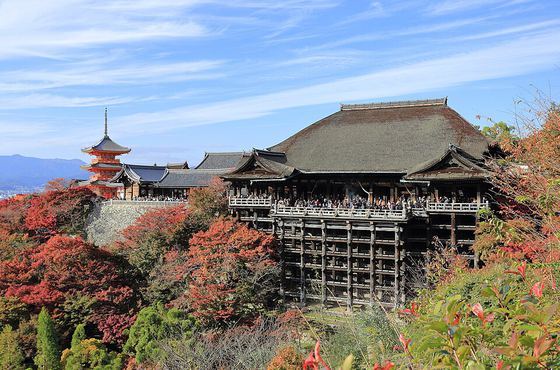
This was a place of worship before the capital was ever built. Its famous stage juts out from a cliff on a frame of wooden pillars, a way of building that has nothing in common with the orderly grid laid out on the flat land of Heian-kyo. It shows what drew people to this spot before Kyoto became a city of straight streets.
2Kinkaku-ji 金閣寺Day 3
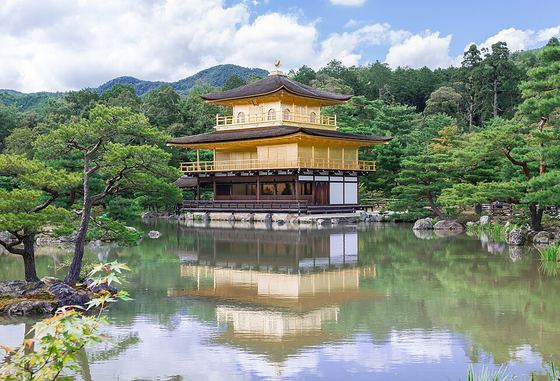
Ashikaga Yoshimitsu, the third shogun of the Muromachi shogunate, built this as his villa, and he made his point in the plainest way possible: with gold leaf. It is a building that announces the warrior class had risen above the aristocracy. The pavilion you see today burned in 1950 and was rebuilt in 1955, but its form still says exactly what Yoshimitsu meant it to say.
3Ginkaku-ji 銀閣寺Day 2
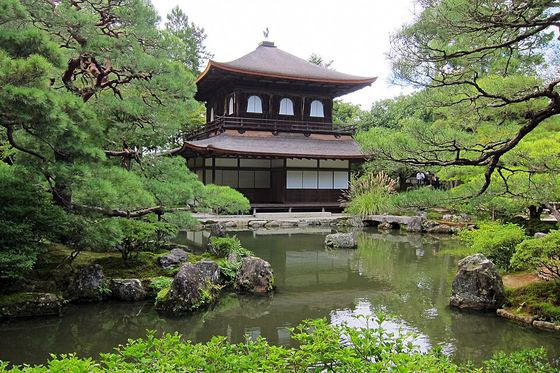
Ashikaga Yoshimasa, the eighth shogun from the same family, built it, and there is no silver on it. By then, showing power through luxury had had its day, and taste had turned toward finding value in restraint. See it after Kinkaku-ji and the shift is impossible to miss.
4Nijo-jo Castle 二条城Day 2
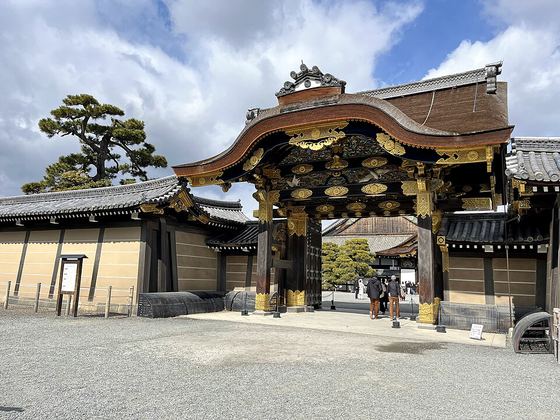
This was the Tokugawa family's base in Kyoto. The shogunate was run from Edo, so why build a castle here at all? Because as long as the imperial court stayed in Kyoto, someone had to keep an eye on it. The castle shows where Kyoto stood once the center of politics had moved east.
5Fushimi Inari Taisha 伏見稲荷大社Day 1
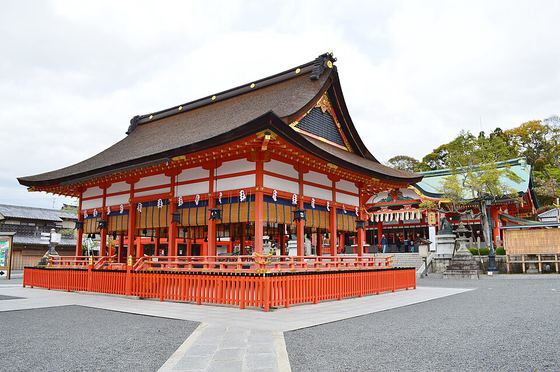
The torii gates were donated by merchants and companies. Here it was not rulers but the people who made money whose faith grew to this scale. The sheer number of gates is a record of who had come to keep the city going.
6Sanjusangen-do 三十三間堂If you have time
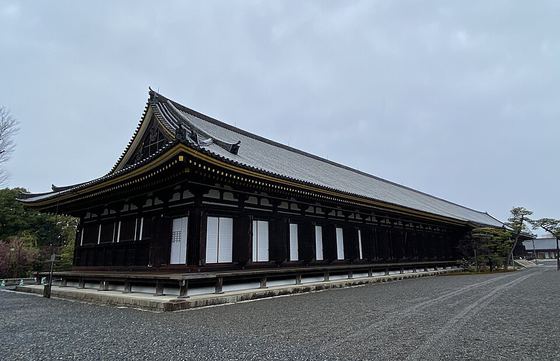
Taira no Kiyomori built this hall and dedicated it at the wish of the Retired Emperor Go-Shirakawa. Inside stand 1000 life-size statues of the thousand-armed Kannon, with one large seated figure in the center: 1001 in all. When the hall was rebuilt in the Kamakura period, workshops of Buddhist sculptors, the Kei school among them, divided the work and finished it in a short time. It shows what happens when a single prayer is carried out as a state project, through sheer numbers.
7Yasaka Shrine 八坂神社Day 1
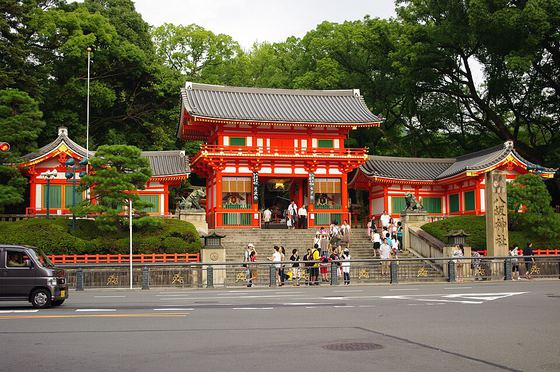
This shrine stands at the eastern edge of Gion. The Gion Festival began as a rite to calm epidemics, and it was the wealth of the townspeople that kept it going. A shrine and a merchant quarter sitting back to back: that layout tells you where Kyoto's power really came from.
8Nanzen-ji 南禅寺Day 2
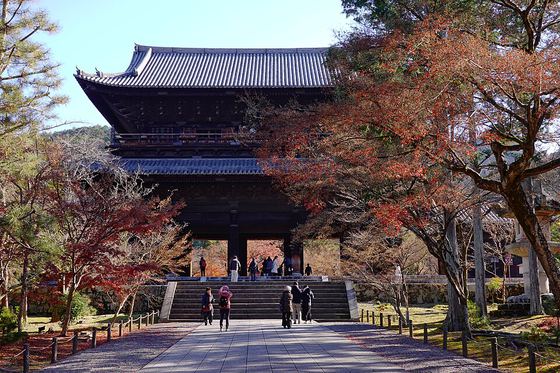
Nanzen-ji was ranked in a class of its own, above even Kyoto's Five Mountains, the leading Zen temples of the city. A brick aqueduct cuts straight across its grounds. It is part of the waterway built in the Meiji era to bring water from Lake Biwa. Few places show modern engineering pushing so directly into a temple with a thousand years behind it.
9Heian Jingu Shrine 平安神宮If you have time
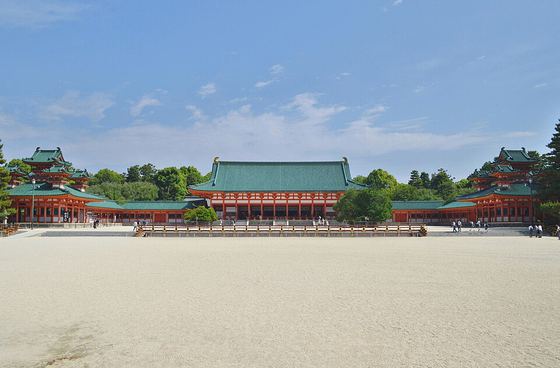
It was built in the Meiji era to mark 1100 years since the capital moved to Heian-kyo. In other words, it is not a Heian-period building at all, but a scaled-down re-creation of the old imperial palace compound. It shows how modern Kyoto wanted to present the answer to a question: what had our capital been?
10To-ji 東寺If you have time
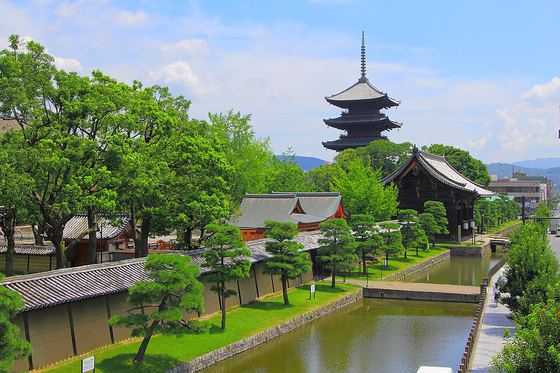
To-ji was a government temple placed east of Rajomon, the gate at the entrance to Heian-kyo, to protect the capital. The very idea that a temple was needed in this spot reveals how the people who planned the city thought. Its five-story pagoda is the tallest wooden one in Japan.
11Arashiyama 嵐山Day 3
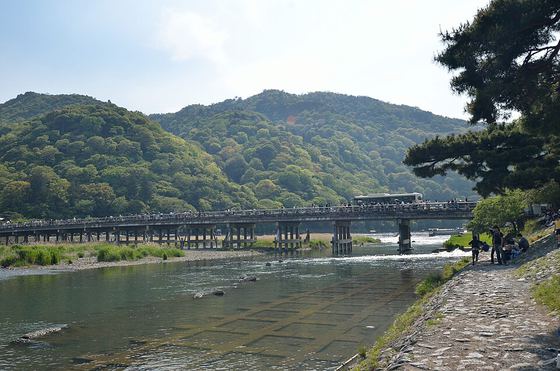
This is where aristocrats built their country villas. The conditions were distance from the city, a river and mountains. If central Kyoto was the place for politics, Arashiyama was the place to get away from it. Even inside the capital, land had been set aside for leaving it behind.
12Tenryu-ji 天龍寺Day 3
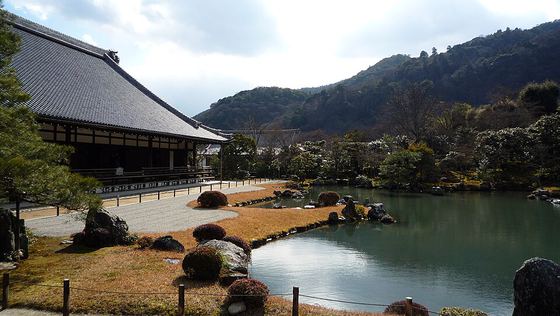
Ashikaga Takauji built this temple to honor the memory of Emperor Go-Daigo, the man he had fought against. Building a temple for a former rival was how politics was done at the time, and that habit is preserved here. The garden takes in the hills of Arashiyama and Kameyama as part of the view, so its design reaches well beyond its own walls.
13Kitano Tenmangu Shrine 北野天満宮If you have time
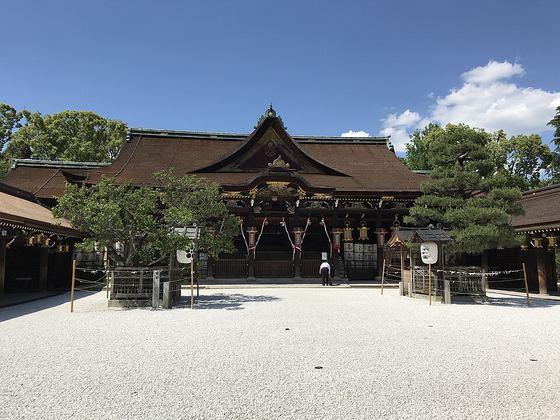
The shrine is dedicated to Sugawara no Michizane. He lost a political struggle and was sent into exile; after his death, people came to fear his curse, and in time he became the god of learning. The shrine is what that journey from fear to worship looks like.
14Kyoto Imperial Palace 京都御所If you have time
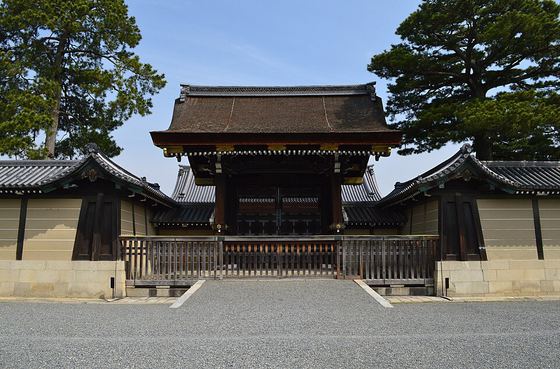
Until the move to Tokyo in the Meiji era, this is where the emperor lived. Look closely and you will notice it is not fortified like a castle: it is simply enclosed by walls and gates. It was protected in a completely different way from a warrior's stronghold.
15Nishiki Market 錦市場Day 2
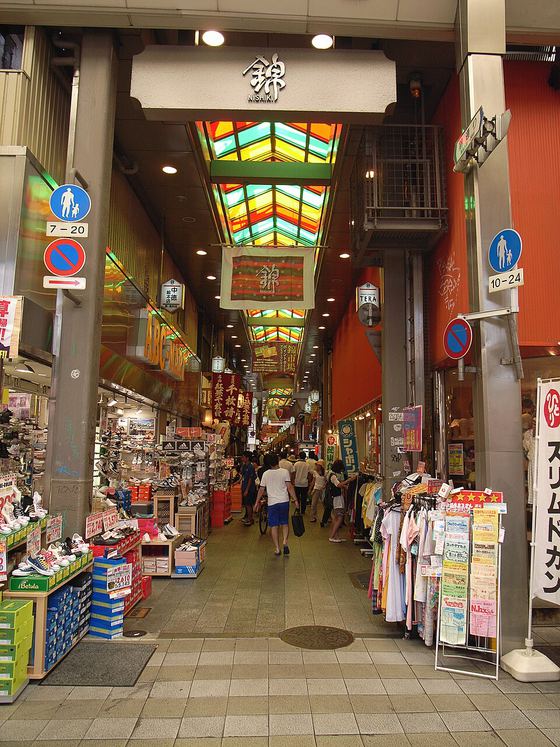
This market has been running for four hundred years. The spot once had plenty of spring water rising from underground, and that is why fish could be handled here in the days before refrigeration. It shows how the lie of the land decided where trade could happen.
After you've seen them all
By the end, you carry a picture of how power in Japan moved from one group to the next, drawn in buildings. Kyoto stops being a list of famous sights and becomes a single line you can follow through the city.
Visiting these 10 places in the shortest order
3 days, 2 nights, with 6 h 35 min of travel in total. Stay at Kyoto-Kawaramachi Station area.
- Day 1 Fushimi Inari Taisha → Kiyomizu-dera → Yasaka Shrine
- Day 2 Nijo-jo Castle → Ginkaku-ji → Nanzen-ji → Nishiki Market
- Day 3 Kinkaku-ji → Tenryu-ji → Arashiyama
If you have time: Sanjusangen-do, Heian Jingu Shrine, To-ji, Kitano Tenmangu Shrine, Kyoto Imperial Palace (covered in the story, but left out of the route to keep each day manageable).
For arrival times at every stop, see the Kyoto itinerary.
More stories
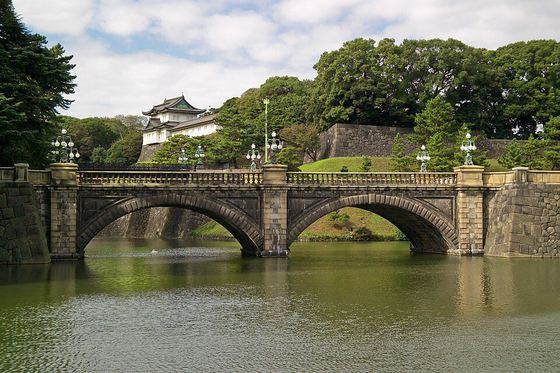 TokyoTokyoA city made by reshaping the landThis was wetland. People dug it out, filled it in and turned it into a city, and the marks of that work are still the shape of Tokyo today.14 places · 3 days, 2 nights
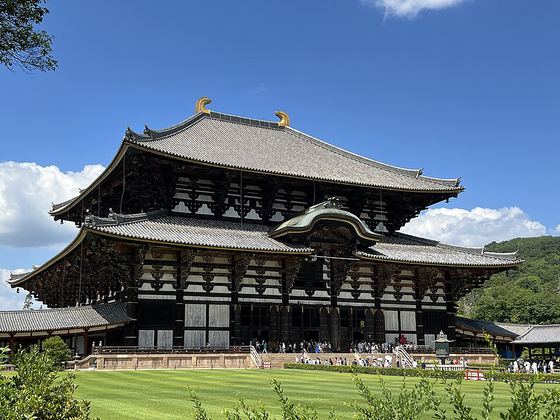 NaraNaraWhere Japan tried to become a nation-stateHere you can still see the real thing: what remains from the years when Japan was being put together as a country.9 places · 2 days, 1 night
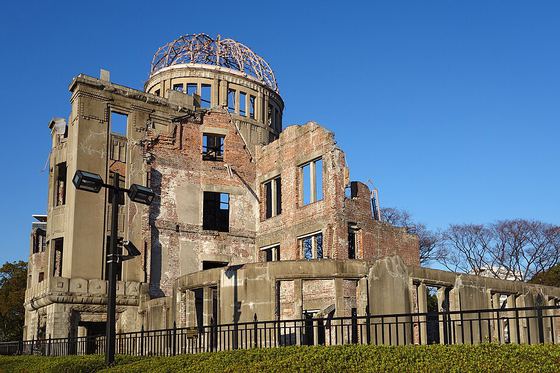 HiroshimaHiroshima & MiyajimaA place where people twice chose to preserveA city that was destroyed, and a shrine built out over the sea so that the island would not be harmed. Both lie on the same bay.10 places · 2 days, 1 night