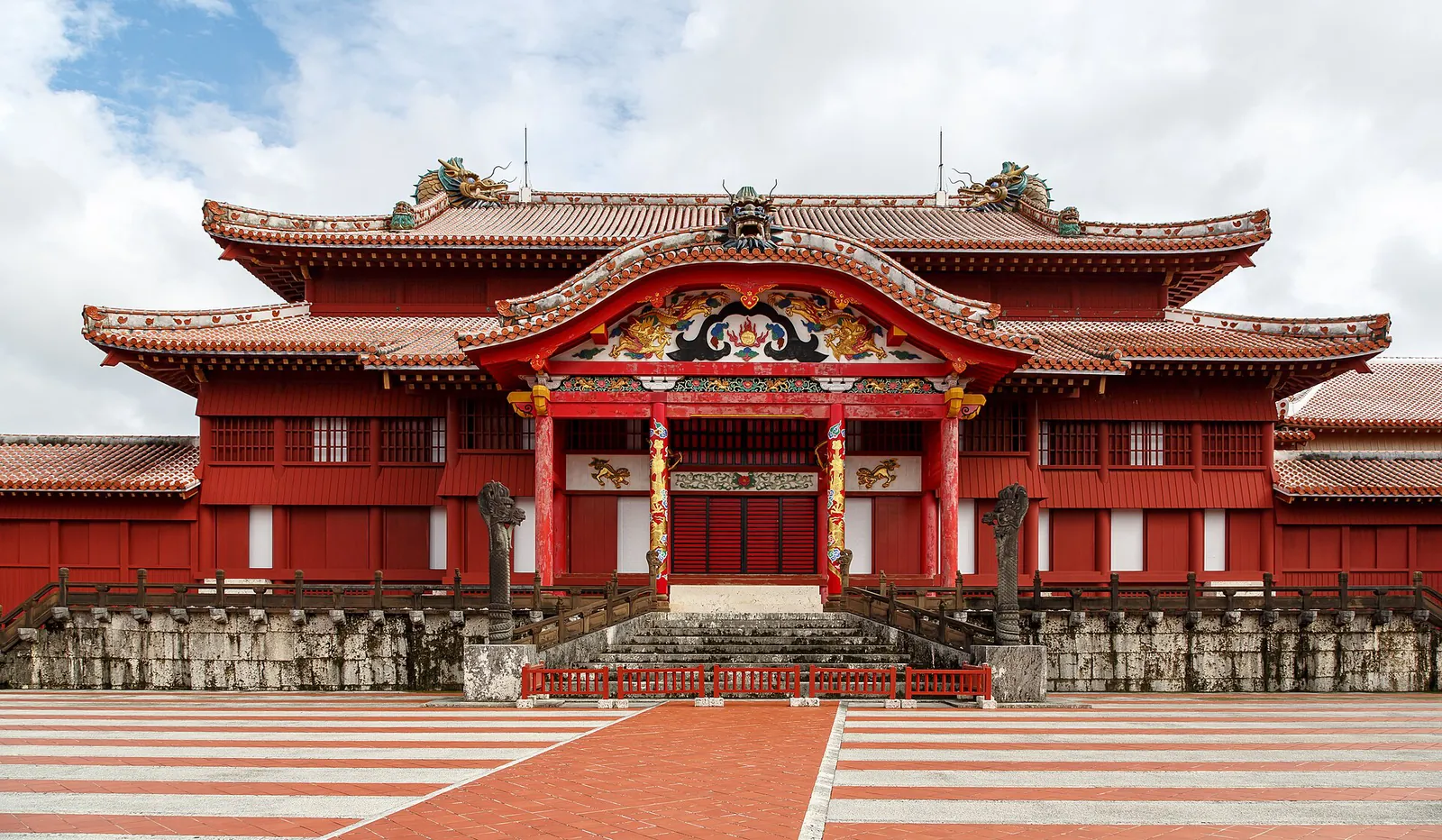
Shuri Castle / CEphoto, Uwe Aranas · CC BY-SA 3.0
Okinawa · suggested length: 3 days, 2 nights
Okinawa History: The Ryukyu Kingdom, the War and After
Okinawa in three lines
- Okinawa had a country of its own, the Ryukyu Kingdom, which traded with both China and Japan.
- Its buildings, beliefs and language grew along a different line from the mainland's.
- On top of that lie the Battle of Okinawa and the American administration after the war.
This was an independent kingdom, with a culture that was neither Japanese nor Chinese.
Planned and checked by Waka Travel (Japan) ·
A kingdom open to the sea, and what came after
Okinawa was once an independent country, the Ryukyu Kingdom. It dealt with both China and Japan and prospered on East Asian trade. Its architecture, beliefs and language developed along a different line from the mainland's. On top of that lie the war and the postwar occupation. Traveling around Okinawa means seeing how these layers overlap.
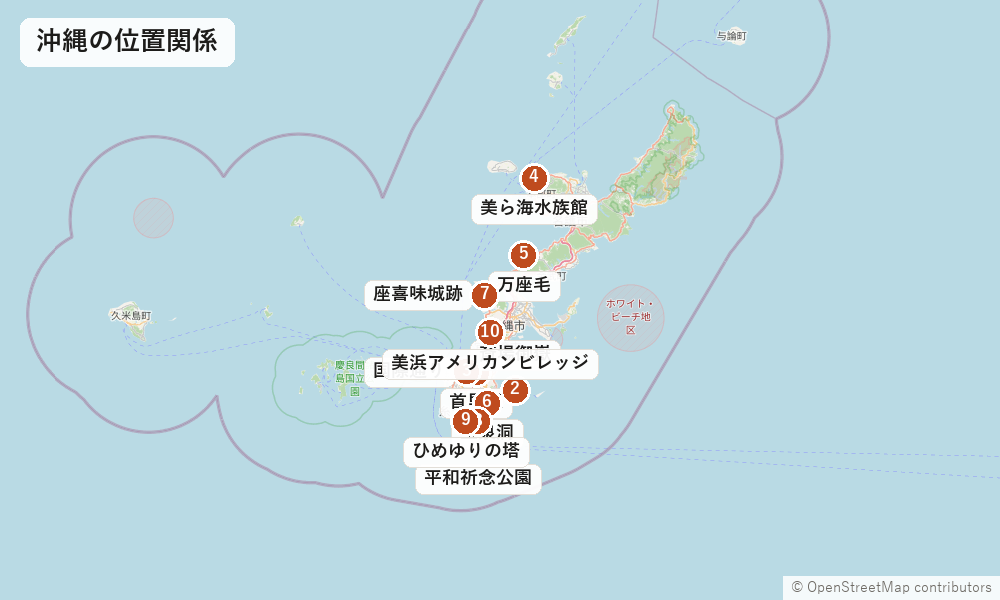
What each place tells you
1Shuri Castle 首里城Day 3
The royal palace of the Ryukyu Kingdom. Chinese influence is strong in its red roof tiles and decoration, and it is built differently from castles on the mainland. The main hall burned down in 2019 and has been under reconstruction. According to the official website of Shuri Castle Park, the reconstructed main hall is scheduled to open to the public from 23 November 2026, with viewing of the interior by advance reservation (as of November 2026). It's a place to see how a form identical to the one before the fire was recovered through records and craftsmanship. Access and reservations may change, so check the official website before you go.
2Sefa-utaki 斎場御嶽If you have time
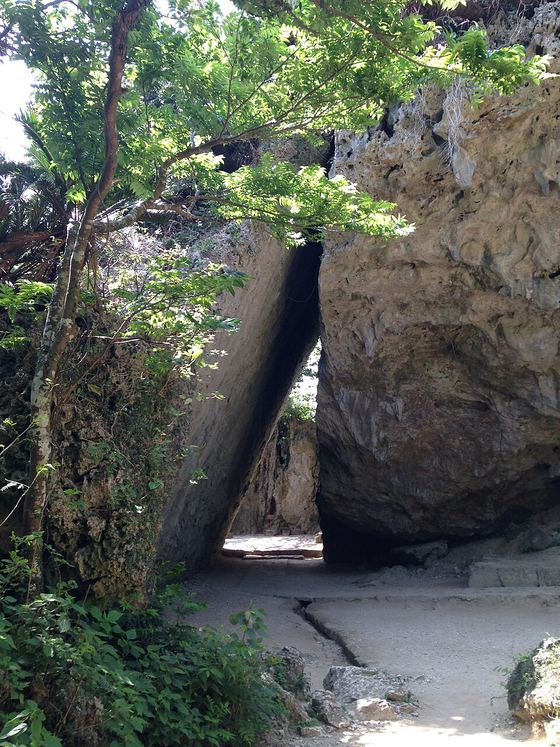
The most sacred site of the Ryukyu Kingdom. People prayed to the rocks and the forest themselves, not to a building, and it was women who led the rituals. You can see how differently faith took shape here compared with shrines on the mainland.
3Kokusai-dori Street 国際通りDay 3
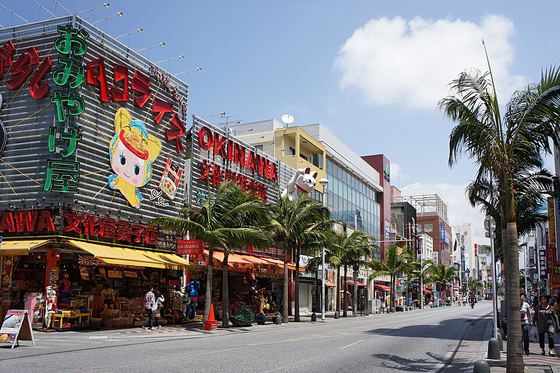
A street that rose from the burned-out ruins after the war. On this one street, you feel that the story of the kingdom and the story of the postwar years belong to the same island.
4Okinawa Churaumi Aquarium 美ら海水族館Day 2
It recreates the sea of the Kuroshio Current and its coral reefs. Okinawa's food and industries all depend on this warm sea, so this is where you see the nature beneath the island's culture.
5Cape Manzamo 万座毛Day 2
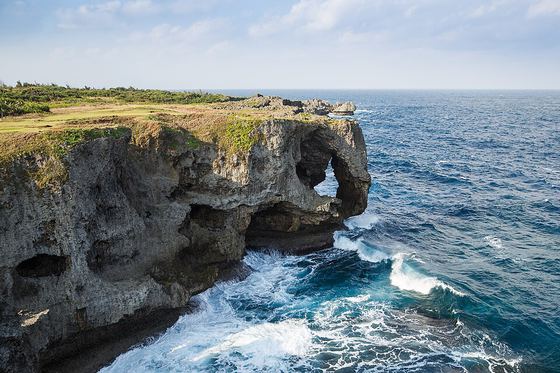
A cliff carved when waves wore away Ryukyu limestone. Central and southern Okinawa Island are built of limestone from layer upon layer of uplifted coral reef, and the cliff exposes a cross-section.
6Gyokusendo Cave 玉泉洞If you have time
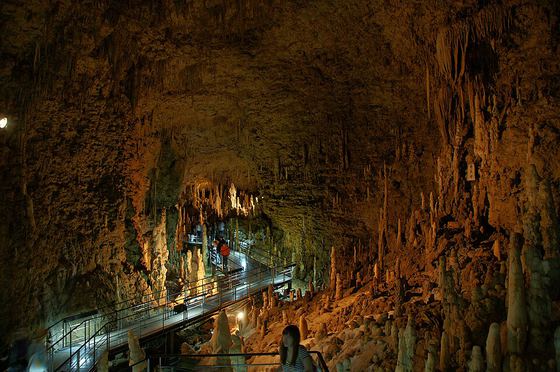
A limestone cave formed as rainwater dissolved Ryukyu limestone. Here you see from the inside that the island's foundation is piled-up coral.
7Zakimi Castle Ruins 座喜味城跡If you have time
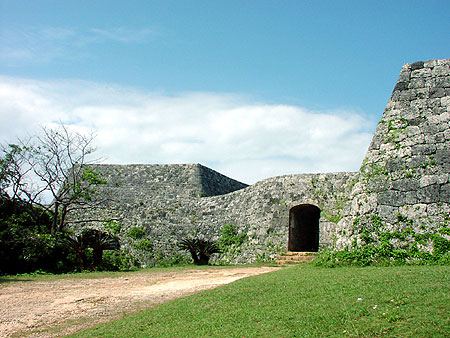
A gusuku (castle) built by a Ryukyuan lord (aji). Its curving stone walls are laid in a completely different way from the straight walls of mainland castles, and how the stones are fitted shows who the island learned its techniques from.
8Peace Memorial Park 平和祈念公園Day 1
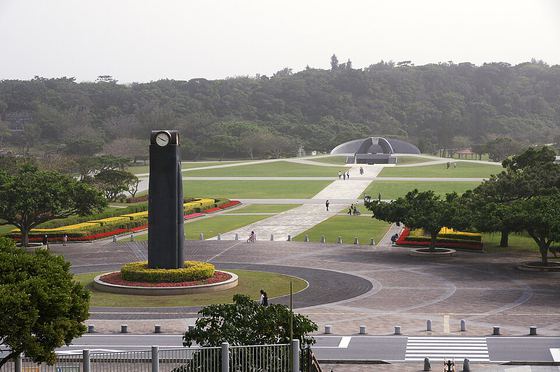
The southern tip of the island, where organized fighting in the Battle of Okinawa ended. On the Cornerstone of Peace, the names of the dead are engraved with no distinction between friend and foe. What the island bore in the 20th century is laid out here, name after name.
9Himeyuri Tower ひめゆりの塔Day 1
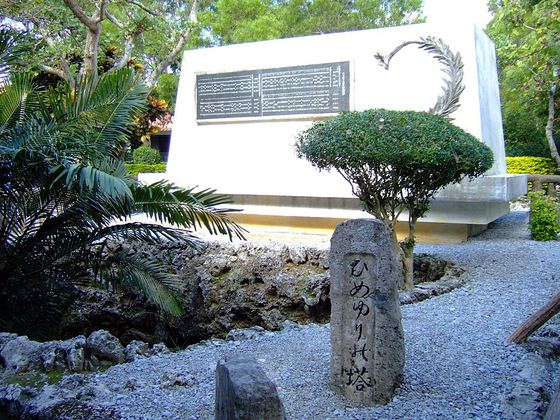
A memorial to the schoolgirls and teachers mobilized as nursing staff. The records of real people show how deeply the war drew in ordinary residents.
10Mihama American Village 美浜アメリカンビレッジDay 2
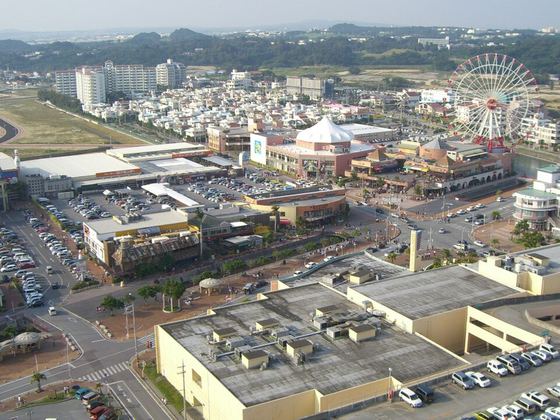
A shopping and entertainment complex built on the site of a former US military base. The scene shows how postwar Okinawa has made its living alongside the bases.
After you've seen them all
By the end, you see a land with its own history, not just a "tropical resort." A kingdom, a war and the sea overlap to make what you see today.
Visiting these 7 places in the shortest order
3 days, 2 nights, with 5 h 46 min of travel in total. Stay at Mihama area → Kencho-mae Station area.
- Day 1 Himeyuri Tower → Peace Memorial Park
- Day 2 Cape Manzamo → Okinawa Churaumi Aquarium → Mihama American Village
- Day 3 Shuri Castle → Kokusai-dori Street
If you have time: Sefa-utaki, Gyokusendo Cave, Zakimi Castle Ruins (covered in the story, but left out of the route to keep each day manageable).
For arrival times at every stop, see the Okinawa itinerary.
More stories
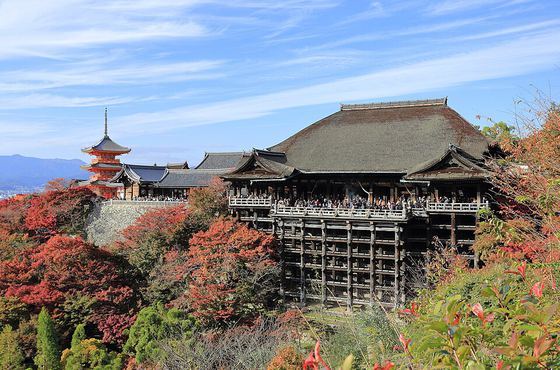 KyotoKyotoA thousand years of a city rebuilt by whoever held powerEach time power changed hands, whoever took over left their own answer in the same basin. In Kyoto, those answers still stand side by side.15 places · 3 days, 2 nights
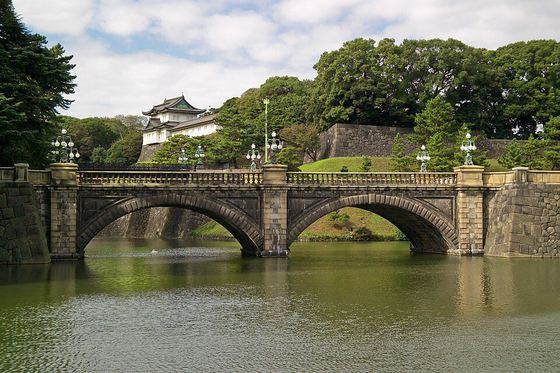 TokyoTokyoA city made by reshaping the landThis was wetland. People dug it out, filled it in and turned it into a city, and the marks of that work are still the shape of Tokyo today.14 places · 3 days, 2 nights
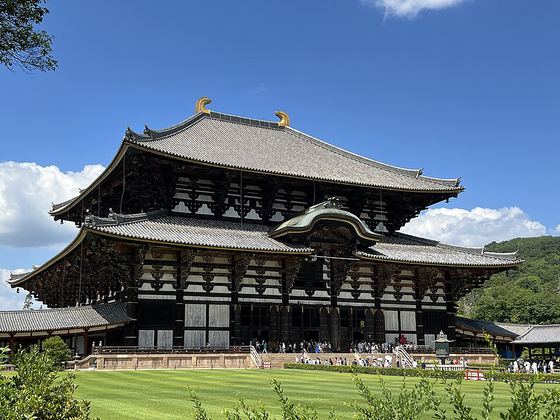 NaraNaraWhere Japan tried to become a nation-stateHere you can still see the real thing: what remains from the years when Japan was being put together as a country.9 places · 2 days, 1 night
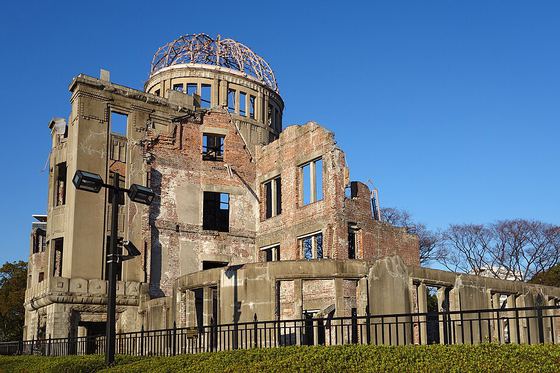 HiroshimaHiroshima & MiyajimaA place where people twice chose to preserveA city that was destroyed, and a shrine built out over the sea so that the island would not be harmed. Both lie on the same bay.10 places · 2 days, 1 night
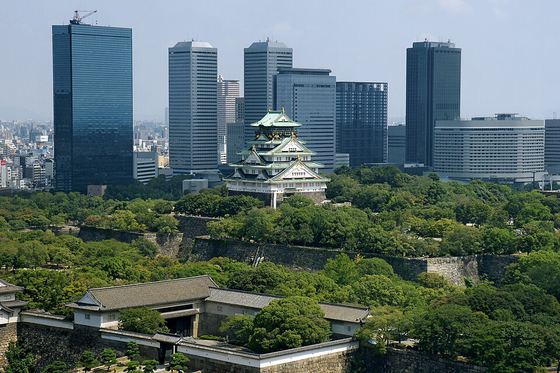 OsakaOsakaA hub known as the "nation's kitchen"Where goods gather, a system grows up to handle them, and so does a culture of people who make money from them.10 places · 2 days, 1 night
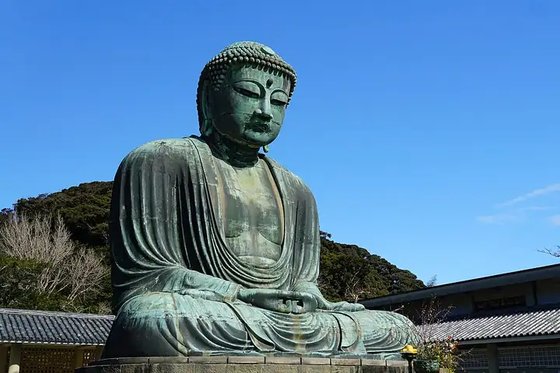 KanagawaKamakuraThe samurai's first capital, protected by mountains and seaOn a narrow piece of land with mountains on three sides and the sea on the fourth, the samurai set up their own government for the first time.7 places · 2 days, 1 night
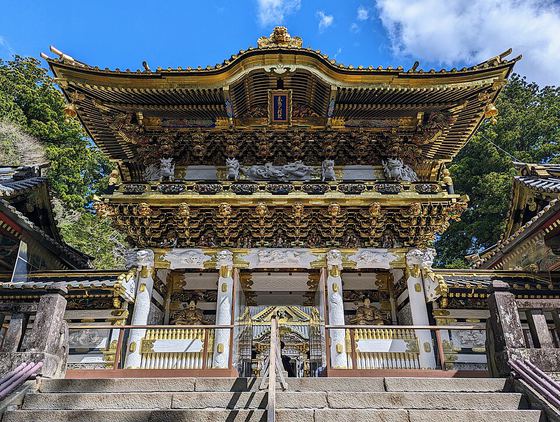 NikkoNikkoWhere mountain worship meets a god made for politicsOn a mountain that was already sacred, a shrine was added that turned a man into a god.9 places · 2 days, 1 night
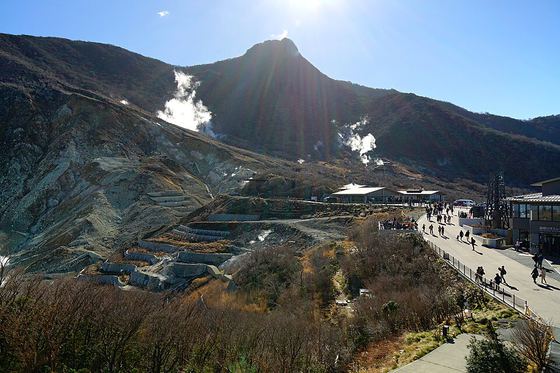 HakoneHakoneWhere the landscape shaped the rulesThe rugged land a volcano left behind became, just as it was, a line of defense for Edo.9 places · 2 days, 1 night
 GifuTakayama & Shirakawa-goTwo ways of living in a land shut in by mountainsDeep in the mountains, Takayama grew up around the shogunate's government office, while Shirakawa-go made its living from work done in the attic.7 places · 2 days, 1 night
 KanazawaKanazawaAn Edo-period town plan, still visible because it was never destroyedA castle town the war never reached still keeps its original plan.11 places · 2 days, 1 night
 SapporoSapporoA city drawn up as national policyAbout 150 years ago, there was no city here. Sapporo was built from a blueprint.16 places · 3 days, 2 nights